How to Identify the Right Thrust Washer for High-Load Applications
Evaluating Material Choices
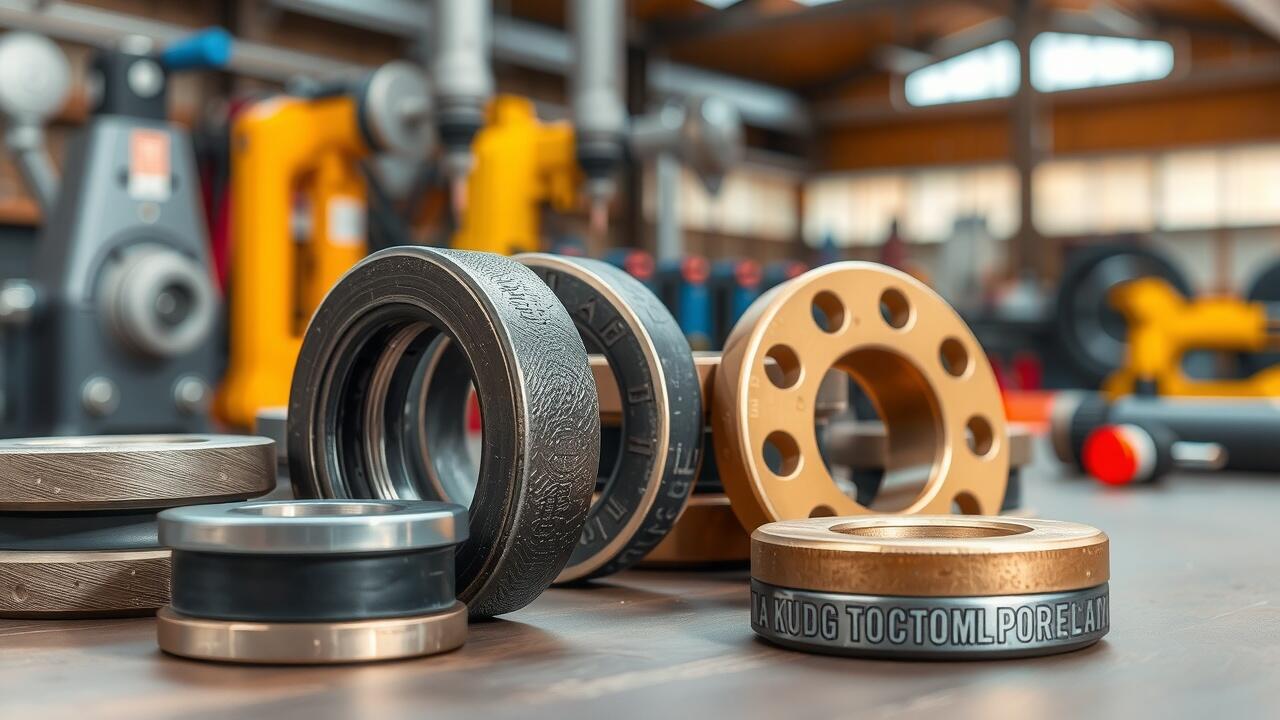
Material choice is critical in selecting thrust washers for high-load applications. Metals such as steel and bronze provide excellent strength and durability but may face challenges with corrosion. Alternatively, PTFE thrust washers offer low friction and high chemical resistance, making them ideal for environments where lubrication may be minimal. For those seeking the advantages of composites, engineered materials can combine properties, offering tailored solutions for specific applications.
Understanding the performance characteristics of each material ensures proper selection. A Teflon thrust washer is particularly suitable for high-heat applications, maintaining integrity up to temperatures of 500°F. Industry standards recommend adhering to specific guidelines when selecting materials, especially regarding load ratings and environmental factors. Engaging with a reputable PTFE washer manufacturer can provide insights into the latest material advancements and usage data, facilitating informed decision-making.
How Does Material Impact Performance? (Metals, Plastics, and Composites)
Material selection directly influences the performance and durability of thrust washers in high-load applications. Metals like steel and bronze are commonly favored for their excellent load-bearing capabilities and wear resistance. For instance, using steel thrust washers can accommodate higher loads compared to traditional plastic options due to their tensile strength and longevity. Conversely, plastics such as PTFE exhibit lower friction coefficients, providing excellent wear resistance while allowing for energy savings in machinery with frequent movement. Teflon thrust washers are particularly valuable in environments with high corrosion potential, as they maintain their integrity when exposed to various chemicals.
Composites serve as a bridge between metals and plastics, combining benefits from both categories. While they may not bear loads as effectively as metals, composites can provide a lighter alternative suitable for specific applications. The composition allows for tailoring thermal and electrical properties, making them versatile for specialized scenarios. A reputable PTFE washer manufacturer will typically provide a range of thicknesses and diameter options to ensure compatibility with a variety of mechanical setups. Proper material choices informed by load demands and environmental conditions can lead to vastly improved operational efficiencies and extended service life of machinery components.
| Material | Load Capacity | Friction Coefficient | Corrosion Resistance | Application Suitability |
|---|---|---|---|---|
| Steel | High | Moderate | Poor | Heavy Machinery |
| Bronze | Moderate to High | Low | Good | Marine Applications |
| PTFE (Teflon) | Low to Moderate | Very Low | Excellent | Chemical Processing |
| Composites | Moderate | Varies | Good | Lightweight Applications |
Sizing Thrust Washers Correctly
Correct sizing of thrust washers is critical in ensuring optimal performance under high-load conditions. Engineers must accurately measure both the diameter and thickness of the washers, as improper dimensions can lead to premature failure of components. For instance, if a thrust washer is under-dimensioned, it may not withstand the axial loads, whereas an oversized washer can introduce unnecessary friction and diminish efficiency. Adhering to the ANSI/ASME B18.8.1 standards provides a framework for effective sizing, ensuring compatibility with the involved machinery.
When selecting thrust washers, the choice between materials such as PTFE or Teflon can significantly impact their performance in specific applications. A ptfe washer manufacturer might recommend Teflon thrust washers in environments exposed to high temperatures and corrosive substances. These materials provide superior sliding capabilities while reducing wear and extending service life. Regular inspections and proper maintenance procedures, combined with correctly sized washers, ultimately lead to an enhanced operational lifespan and decreased total cost of ownership.
What Are the Guidelines for Proper Sizing? (Diameter and Thickness Measurements)
Accurate sizing of thrust washers is essential for optimal performance in high-load applications. Proper measurement of the diameter and thickness significantly influences load distribution and longevity. For instance, using a Teflon thrust washer requires specific tolerances to ensure even contact with mating surfaces. Standard practices suggest that the inner diameter should match the shaft size precisely, while the outer diameter must fit securely against the housing, preventing any movement that could lead to wear and tear. Deviations in these measurements can lead to minor shifts under load, resulting in inefficiencies.
Thickness should also be carefully considered, as it affects the load-bearing capacity and overall durability. Increasing the thickness can enhance the washer's ability to handle higher loads; however, it may also influence the assembly space and operational clearances. For applications requiring superior chemical resistance and low friction, consulting a PTFE thrust washer manufacturer can provide insights into appropriate thickness standards for specific environments. Adhering to industry specifications, such as those set forth by the American Society for Testing and Materials (ASTM), ensures that the chosen thrust washers meet rigorous performance criteria tailored for demanding scenarios.
Installation Best Practices
Proper installation of thrust washers significantly contributes to their longevity and overall performance. Attention must be given to the alignment of components during the installation process, as misalignment can lead to uneven load distribution and premature wear. For instance, a study indicated that in applications utilizing PTFE thrust washers, misalignment can increase operational costs by up to 25% due to increased friction and energy consumption. Utilizing specialized tools, such as micrometers for precise measurements, ensures accurate alignment and enhances the efficiency of the mechanism.
Maintenance practices surrounding installation also play a crucial role. Cleanliness is essential to avoid introducing contaminants that could compromise the washer's integrity. A Teflon thrust washer manufacturer often emphasizes the importance of dust-free environments during assembly. Furthermore, following guidelines for torque specifications mitigates the risk of over-tightening, which can distort the washer and lead to early failure. Implementing these best practices not only increases durability but also improves performance metrics, substantially benefiting high-load applications.
How Can Proper Installation Improve Longevity? (Techniques and Tools Required)
The correct installation of thrust washers significantly impacts their operational lifespan. A thorough understanding of the specific requirements for each application is crucial. For instance, when using PTFE thrust washers, professionals must ensure that the surfaces are clean and free from contaminants before assembly. This aids in achieving optimal adhesion and frictional performance. Utilizing precision measuring tools during installation enhances the accuracy of the fit, preventing issues such as premature wear or misalignment.
The employment of suitable tools cannot be underestimated. Using a torque wrench for tightening fasteners prevents overtightening, which can lead to the deformation of the washer. Additionally, selecting a reputable Teflon thrust washer manufacturer ensures that the washers meet industry standards, enhancing reliability. Regular inspections post-installation can uncover any early signs of failure, allowing for preventative measures to be taken. Implementing these techniques fosters a proactive approach, which is essential for industries where high-load applications are commonplace.
5 Key Strategies for Maintaining Thrust Washers
Regular inspection of thrust washers plays a crucial role in their maintenance and performance longevity. Frequent checks should focus on wear patterns, deformation, and signs of thermal degradation. For instance, Teflon thrust washers can exhibit a decrease in effectiveness if subjected to excessive heat or pressure over time. A comprehensive visual assessment combined with tactile feedback, such as checking for smooth movement, helps identify issues early. Maintaining specific metrics—such as thickness tolerances within ±0.01 mm—can prevent operational failures in high-load applications.
Lubrication remains an essential practice for optimal performance and extended life of thrust washers. Using the correct type of lubricant, tailored to the washer material, ensures efficient operation. PTFE thrust washers, for example, often benefit from reduced friction when paired with appropriate greases or oils, reducing wear and enhancing load capacity. Collaboration with a reliable PTFE washer manufacturer can yield specifications for the best lubrication practices tailored to specific working conditions. Establishing a routine lubrication schedule, ideally every 3 to 6 months, reinforces the integrity of thrust washers, maintaining their performance under demanding operational conditions.
What Maintenance Measures Should You Implement? (Inspection and Lubrication Tips)
Regular inspection of thrust washers is essential to maintain optimal performance in high-load applications. Professionals often recommend a systematic inspection schedule, such as every 500 hours of operation or annually, whichever comes first. During these inspections, one should evaluate surface wear, discoloration, or structural integrity. Utilizing PTFE thrust washers can aid in minimizing wear due to their superior low-friction characteristics. When sourcing such components, work with a reputable Teflon thrust washer manufacturer to ensure material consistency and reliability.
Lubrication plays a significant role in extending the lifespan of thrust washers, particularly in high-load environments. The choice of lubricant must align with the material properties of the thrust washer; for example, when using Teflon thrust washers, a compatible lubricant can enhance the performance significantly. Industry standards recommend applying lubrication at specified intervals, typically every 200 hours of use. Moreover, employing a lubrication regime that includes routine checks can ensure that no contaminants compromise the function of the thrust washers, thus preventing premature failure.
- Regularly schedule inspections every 500 hours of operation or annually.
- Assess the thrust washers for signs of wear, discoloration, or damage.
- Choose PTFE thrust washers for reduced friction and enhanced performance.
- Partner with reputable manufacturers for consistent quality of components.
- Apply lubrication according to industry standards, generally every 200 hours.
- Conduct routine checks to ensure lubricant quality and the absence of contaminants.
- Keep detailed maintenance records to track the performance and condition of thrust washers.
FAQS
What materials are commonly used for thrust washers in high-load applications?
Common materials include metals such as steel and bronze, plastics like nylon and PTFE, and composites designed to offer enhanced strength and durability.
How does the material choice affect the performance of thrust washers?
The material choice impacts factors such as load-bearing capacity, wear resistance, thermal stability, and overall durability, which are crucial for performance under high-load conditions.
What are the key guidelines for sizing thrust washers correctly?
Proper sizing involves measuring the diameter and thickness of the washer to ensure it fits the application requirements and can adequately support the loads without failure.
What installation techniques can enhance the longevity of thrust washers?
Techniques such as ensuring a clean installation surface, using appropriate tools to avoid damage, and following manufacturer guidelines can significantly improve the longevity of thrust washers.
What maintenance measures should be implemented to ensure the effective functioning of thrust washers?
Regular inspection for wear and damage, along with proper lubrication practices, should be implemented to prevent premature failure and maintain optimal performance of thrust washers.