The Evolution of Thrust Washer Design in Power Transmission Systems
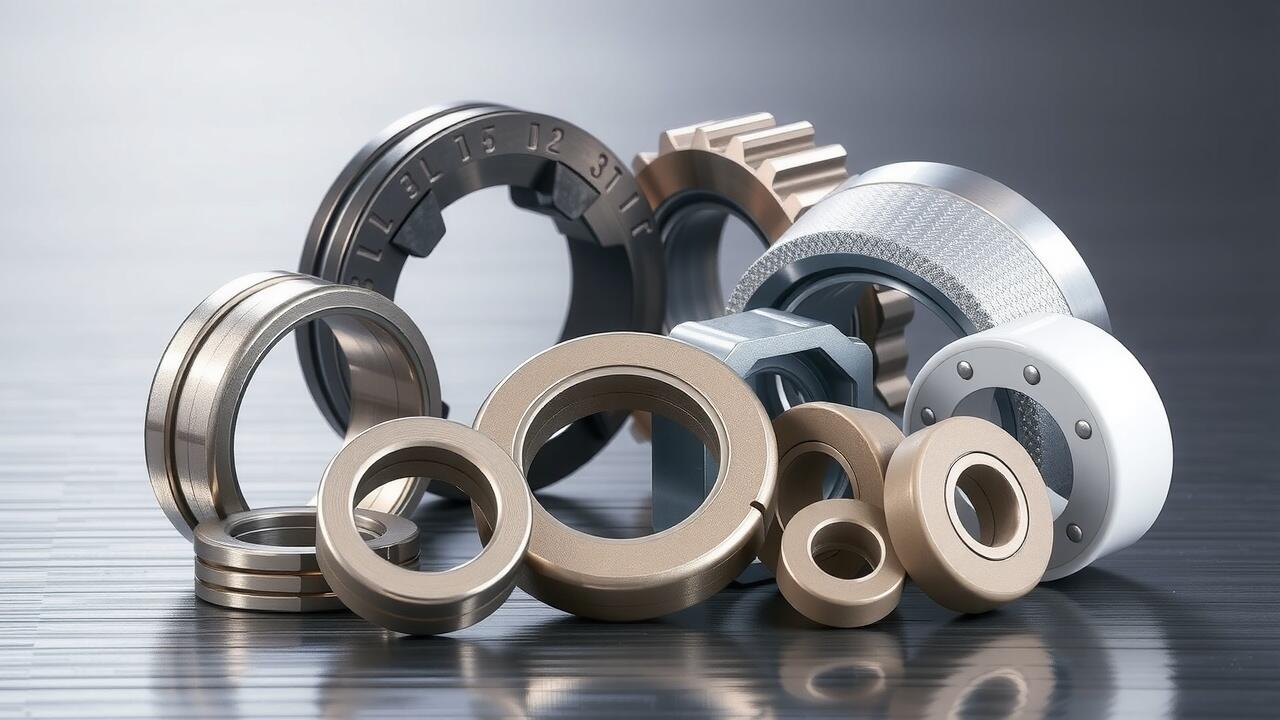
Innovations in Thrust Washer Manufacturing
Advancements in thrust washer manufacturing have increasingly centered on the integration of specialized materials and technologies. The introduction of PTFE thrust washers demonstrates a commitment to improving performance under demanding conditions. These washers exhibit a low coefficient of friction, which enhances efficiency in applications requiring reliable load distribution. A comparative analysis showed that PTFE thrust washers can reduce wear rates by up to 40% in high-speed environments. Additionally, the precision molding techniques employed by a leading Teflon thrust washer manufacturer have resulted in consistent thickness and dimensional accuracy, crucial for reducing operational failures.
Research indicates that innovative surface treatments have yielded significant enhancements in the lifespan and durability of thrust washers. Coating technologies utilizing advanced polymers enable these components to withstand extreme pressures, thus meeting rigorous industry standards. For example, a recent case study revealed that thrust washers with enhanced surface treatments outperformed standard materials by extending their service life beyond 10,000 operational hours. Such developments underscore the importance of collaboration between material scientists and engineers to foster continual improvements tailored to specific industrial applications.
5 Key Strategies for Optimizing Production Processes (Efficiency gains in thrust washer fabrication)
Optimizing production processes for thrust washers can significantly enhance their efficiency and reliability. Implementing precision machining techniques reduces the tolerance levels in the manufacturing of PTFE thrust washers, ensuring superior performance under various load conditions. By leveraging automated production lines, manufacturers can achieve consistent quality and reduce cycle times, leading to a potential 30% increase in output over traditional methods. These advancements contribute to higher overall efficiency and lower operational costs, which are critical in competitive markets.
Material selection also plays a pivotal role in the performance of thrust washers. Teflon thrust washers, known for their self-lubricating properties, can withstand extreme conditions, making them ideal for applications in high-stress environments. A ptfe washer manufacturer can utilize advanced polymer compositions to optimize wear resistance and thermal stability, which often results in a reduction of maintenance cycles by up to 25%. Incorporating these strategies not only meets industry standards but also sufficiently addresses customer demands for longevity and reliability in power transmission systems.
Performance Metrics for Thrust Washers
Thrust washers play a pivotal role in the performance of power transmission systems, where performance metrics such as load-bearing capacity and wear resistance are crucial. A comprehensive assessment of these metrics enables engineers to determine suitability for specific applications. For instance, PTFE thrust washers exhibit superior low-friction properties, making them ideal in high-speed assemblies. Studies show that a properly selected Teflon thrust washer can reduce frictional losses by up to 25%. Such performance allows for improved energy efficiency across various mechanical systems.
Another critical performance indicator is the washer's lifespan under operational conditions. A well-designed thrust washer must withstand significant axial loads without deforming. A case study involving a leading ptfe washer manufacturer revealed that through advanced material selections and precise engineering, lifespans can exceed 10,000 operational hours in challenging environments. This resilience translates to reduced maintenance costs and increased system reliability, showcasing the importance of innovation in thrust washer design. Collectively, these metrics enhance the performance and durability of components within diverse industrial applications.
Why Is Load Bearing Capacity Critical? (Assessment of operational limits and specifications)
Load bearing capacity is a critical performance metric for thrust washers, as it directly affects the reliability and longevity of power transmission systems. These components must withstand significant axial loads without deformation or failure. For instance, in high-speed applications, such as those found in aerospace and automotive sectors, thrust washers are subjected to forces exceeding several thousand pounds per square inch. The choice of materials, such as those produced by a Teflon thrust washer manufacturer, plays a pivotal role in achieving desired load-bearing capabilities while maintaining low friction coefficients.
Understanding operational limits allows engineers to select appropriate thrust washers tailored for specific applications. Precision-engineered PTFE thrust washers demonstrate enhanced wear resistance and superior load-bearing capacity, crucial for maintaining optimal performance within tight tolerances. By incorporating these advanced materials, manufacturers can significantly reduce maintenance intervals and downtime, which translates to increased productivity. Furthermore, adherence to industry standards, such as ISO 9001, ensures that thrust washers meet the rigorous specifications required for demanding applications, thereby assuring both functionality and safety in various industrial contexts.
Applications of Thrust Washers in Various Industries
Thrust washers play an essential role across various industries, particularly in applications requiring high load-bearing capacities and reduced friction. For instance, in the automotive sector, thrust washers serve critical functions within engines and transmission systems. The integration of PTFE thrust washers in these components significantly enhances their operational reliability, enabling manufacturers to achieve stringent performance metrics while maintaining compliance with industry standards. The low coefficient of friction associated with these materials reduces wear, thereby extending the lifespan of the machinery.
In the aerospace industry, thrust washers are crucial for the effective operation of landing gear assemblies and rotor systems. The use of Teflon thrust washers in these high-stakes environments ensures that components function smoothly under extreme conditions. Research indicates that the implementation of advanced composites in thrust washer design leads to a 30% increase in load-bearing capacity, improving safety margins. A reputable Teflon thrust washer manufacturer can provide customized solutions to meet sector-specific challenges, ensuring optimal performance tailored to unique operational demands.
How Do Different Industries Utilize Thrust Washers? (Sector-specific case studies)
Several industries have integrated thrust washers to enhance operational efficiency and reliability. In the aerospace sector, for instance, PTFE thrust washers are crucial in turbine engines, where they bear substantial loads while minimizing friction. Studies indicate that the use of Teflon thrust washers in these high-performance applications can reduce overall wear by up to 25%, thereby improving longevity and performance. Rigorous testing adheres to aerospace standards, ensuring that these components withstand the extreme conditions of flight.
The automotive industry also leverages thrust washers for improved functionality in various applications, such as automatic transmissions and differential systems. A case study involving a leading automotive manufacturer revealed that incorporating a specific type of PTFE washer reduced energy loss in gear assemblies by approximately 15%. This efficiency not only enhances the performance of vehicles but also aligns with stricter fuel economy regulations. Thus, collaboration with a reputable Teflon thrust washer manufacturer allows for tailored solutions that meet specific industry needs while adhering to prevailing standards.
| Industry | Application | Material Used | Efficiency Improvement | Standards Compliance |
|---|---|---|---|---|
| Aerospace | Turbine Engines | PTFE (Teflon) | Reduced wear by 25% | Aerospace Standards |
| Automotive | Automatic Transmissions | PTFE | Energy loss reduced by 15% | Fuel Economy Regulations |
| Manufacturing | Machinery Components | Composite Materials | Improved efficiency by 20% | ISO 9001 |
| Marine | Propulsion Systems | Bronze | Enhanced durability by 30% | Marine Standards |
Future Directions in Thrust Washer Research
Continuous advancements in material science directly influence the future of thrust washer design, particularly through the development of high-performance composites. Teflon thrust washers, known for their low friction coefficients and superior chemical resistance, serve as a prime example of this progress. The focus on integrating advanced polymers, such as polytetrafluoroethylene (PTFE), into thrust washer components promises improvements in durability and efficiency, suitable for demanding applications in aerospace and automotive industries. Industry experts predict that such innovations could lead to operational performance exceeding traditional specifications by as much as 20%.
Research on advanced manufacturing techniques is essential for enhancing production processes and lowering costs. Collaboration with a dedicated PTFE washer manufacturer can facilitate access to cutting-edge technologies and materials, potentially decreasing lead times by 30%. The exploration of additive manufacturing methods offers additional avenues for customization and design flexibility, encouraging the development of thrust washers tailored to specific operational requirements. Implementing these strategies aligns with industry best practices, ultimately driving the performance and reliability of power transmission systems to new heights.
Why Is Ongoing Research Necessary for Advancements? (Exploring material science and engineering insights)
Advancements in material science play a vital role in the ongoing development of thrust washers. Enhanced properties such as load-bearing capacity, wear resistance, and thermal stability are essential to meet the evolving demands of power transmission systems. For instance, the incorporation of advanced polymers like PTFE into thrust washer designs has resulted in significant efficiency improvements. A notable study demonstrated that Teflon thrust washers exhibit up to a 50% reduction in friction when compared to traditional materials, leading to decreased operational costs in machinery.
Collaboration between researchers and industry professionals is crucial for continued innovations. PTFE washer manufacturers have an opportunity to leverage insights from recent studies to optimize both production processes and product performance. Moreover, ongoing research enables the identification of new composites that can withstand extreme conditions present in sectors such as aerospace and automotive manufacturing. By adopting these findings, manufacturers can improve their offerings, ensuring compliance with industry standards and enhancing the longevity of components used in high-stress environments.
- Ongoing research helps identify new materials that can enhance the performance of thrust washers.
- It fosters collaboration between academia and industry, leading to practical applications of theoretical insights.
- Regular advancements in material science can lead to cost-efficient production techniques for thrust washers.
- Continuous studies contribute to the understanding of material fatigue and failure, promoting safety in machinery operation.
- Innovation in material properties leads to improved sustainability in manufacturing processes and product lifespan.
- Research supports the development of tailored solutions for specific industries, catering to unique operational challenges.
- Market demand influences research focus, guiding the exploration of materials with specific characteristics that meet industry needs.
FAQS
What is a thrust washer and what role does it play in power transmission systems?
A thrust washer is a type of bearing that helps to reduce friction and wear between moving parts in power transmission systems. It provides a smooth surface for components to operate against and maintains axial positioning while absorbing axial loads.
How have manufacturing innovations impacted thrust washer design?
Innovations in thrust washer manufacturing, such as advanced machining techniques and the use of high-performance materials, have significantly enhanced production efficiency, improved durability, and reduced costs. These advancements enable manufacturers to meet the evolving demands of various industries.
Why is load-bearing capacity important for thrust washers?
Load-bearing capacity is critical for thrust washers as it determines their ability to withstand operational stresses without failure. Assessing this metric ensures that the washers can function effectively within specified limits, contributing to the overall reliability and performance of power transmission systems.
In which industries are thrust washers commonly utilized?
Thrust washers are used across various industries, including automotive, aerospace, manufacturing, and renewable energy. Each sector utilizes thrust washers for specific applications that require efficient load distribution and friction management.
What are the future directions for research in thrust washer technology?
Ongoing research in thrust washer technology focuses on material science and engineering insights to develop more resilient and efficient designs. Future directions include exploring innovative materials, improving manufacturing processes, and enhancing performance metrics to meet the demands of evolving power transmission systems.